
There are numerous hidden jewels in Pakistan but arguably Khewra Salt Mines are the most astounding spot in the entire country. Not many places blend natural beauty, historical history and modern tourism like this ancient place does. Khewra provides everything from salt walls that gleam to palaces deep underground, and you will remember the experience long after you have left.
Where It Is Located
Khewra Salt Mines are located in the small town of Khewra, in the district of Jhelum, Punjab, Pakistan. The site is located at the base of the Salt Range, a mountain range that runs throughout the north of Punjab. Khewra Mines welcomes thousands of visitors every year and has become a renowned tourist site for the locals and foreigners alike . The main tunnel of the mine was created in 1872 by a British mining engineer Dr. H. Warth and this is also the most common spot for visitors.
History of Salt Mines
This is a rock salt mine on the Potohar Plateau in the Salt Range of the Punjab Region, dating back to the days of King Alexander the Great. The salt is claimed to have been discovered in 326 BC when the horse of Alexander the Great was licking the ground on his voyage to India. Commercial mining started in the Mughal Empire. Later, the British improved the mining process and introduced the tunnel system that remains the backbone of operations today. This mixture of myth and history is what makes Khewra an interesting destination for history lovers.
Salt Mines in Pakistan
Khewra Salt Mines is the oldest and largest in Pakistan and second largest in the world. Each year 250 000 tourists come, many of them from outside. They are taken down into the mines by a train. Trains have been employed since the 1930s when they first brought out the loaded salt carts. The mine generates huge quantities of salt every year, much of which is shipped around the world. This has made Khewra a major economic asset for Pakistan, offering local employment and contributing to international trade.
Structure of the Mine
The structure of the mine is the result of generations of careful design and engineering.
Some important facts about the structure include:
- 19 levels in total
- in the mine 11 levels underground
- about 40 km of tunnels
- a main tourist tunnel of roughly 730 m
As you stroll around the open areas, the walls reveal a stunning spectrum of colors, from brilliant white to soft pink and even a deep red, all determined by the mineral composition of each part. The inherent variety provides each compartment its own flavor.
Size of the Mine
First time visitors are often surprised by the scale of the mine. The whole network of tunnels extends many kilometers into the mountain, horizontally and vertically. Tourists normally walk only one or two kilometers of pathways but that tiny stretch is enough to give you an idea of the huge magnitude and superb engineering of the whole mining complex.
Underground Mines and Tunnels Inside Mines
Exploring the subterranean mines is a one of a kind experience. The deeper you walk into the mountain, the cooler it becomes and the air is much fresher. Tunnels snake through the mines in different areas, some utilized for current mining, others turned into attractively lit tourist routes.
Visitors can ride a small train through part of this tunnel system, replicating the journey originally made by laborers to reach deep mining locations. The train trip is generally one of the most memorable portions of the whole tour, giving guests a real sense of what it might have been like to labor inside the mine generations ago.
Salt Mosque
The Salt Mosque is one of the most stunning structures inside the mine.It is built of salt bricks, and is modeled on the Lahore Badshahi Mosque. It is one of the facts which in a true sense make Khewra worth knowing. A place of worship constructed from the same mineral being mined around it. The soft rainbow lighting makes the mosque sparkle and creates a pleasant and almost magical environment. It remains an active place of prayer and one of the most photographed places in the mine.
Sheesh Mahal
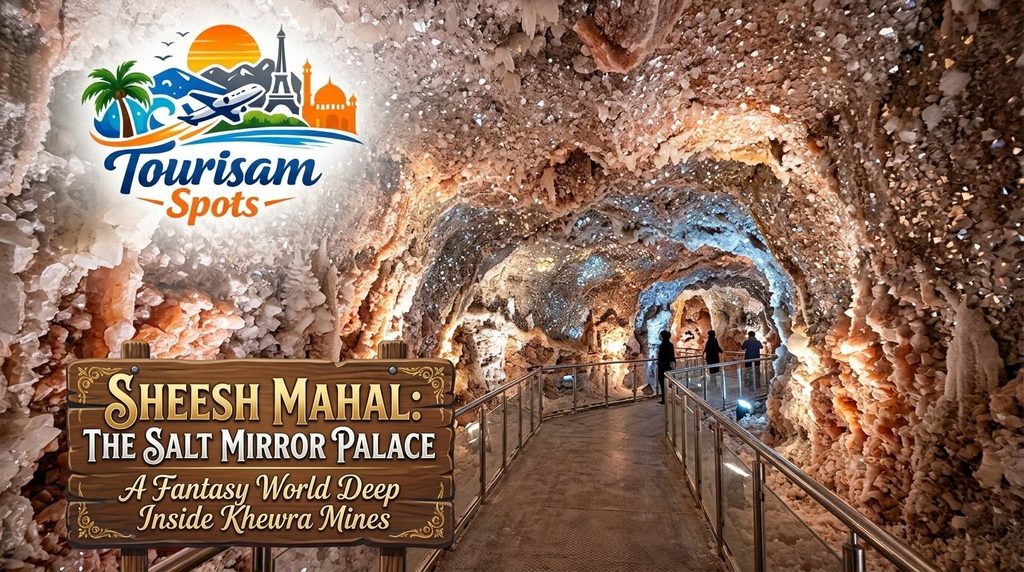
Deep inside the caverns is the Sheesh Mahal or mirror palace, another eye-popping wonder constructed entirely out of salt. Embedded in the walls are small reflective crystals that catch the light and shimmer brightly, lending the chamber a surreal appearance. Visitors often comment that entering through the Sheesh Mahal is like stepping into a fantasy world, and it is one of the top highlights of any Khewra Mines tour.
Himalayan Pink Salt and Salty Rocks
Khewra is famous around the world for manufacturing Himalayan pink salt, a special kind of rock salt that is pale pink in color and contains several minerals. This hue is natural and is caused by iron oxide in the salty rocks which are found all over the mine. Unlike conventional refined salt, Himalayan pink salt has trace elements such as magnesium, potassium and calcium, giving it a unique taste and texture.
Inside and around the mine stores sell a broad variety of pink salt items, including cooking salt, decorative crystals and salt lamps. These things have become a popular gift for locals and international visitors who want to take home a piece of this natural splendor.
Benefits of Pink Salt
Besides being a staple in the kitchen, pink salt has a lot of benefits. Rooms for salt treatment are generally used with fine particles of pink salt which can assist to make breathing easier, especially for patients with respiratory pain. Pink salt lamps are a popular choice for the home to create a soothing light and many believe they assist to purify indoor air.Pink salt is a favorite choice for health conscious homes because of its natural mineral content and mild flavor.
Its velvety texture can be helpful in many ways. It can be exfoliating, decongesting, removing dead skin, cleansing and most importantly, it may put you on the path to healthy skin. Many spa centers have recently incorporated separate Himalayan pink salt tubs since their natural minerals help in relaxation and skin renewal. These health applications have made pink salt popular even beyond the borders of Pakistan.
Why Khewra Mine Is Famous
The Khewra Mine is known for a mix of reasons that very few other places can offer. It is amazingly ranked as one of the oldest and largest salt mines in the earth. Its subsurface attractions like Salt Mosque and Sheesh Mahal make a simple mining site a wonderful visual experience. The international demand for Himalayan pink salt has also put this small town in Punjab on the map, making it a household name in the travel and wellness industries.
Khewra Mines Attractions
There are a number of additional attractions in the Khewra Mines other than the mosque and mirror palace which makes the trip worth it. These include well-lit salt water pools, miniature salt sculptures in the shape of recognizable sites, and open rooms with glistening natural salt formations softly illuminated. There is something new to see around every corner of the mine so it is easy to spend hours exploring without getting bored.
Things to Do in Khewra Mine
If you are wondering what to do at Khewra Mine, the options are plenty. Visitors can take a trip on the tiny train that traverses the tunnels, enjoy the exquisite detail of the Salt Mosque, stroll about the dazzling Sheesh Mahal and purchase authentic pink salt goods at surrounding vendors. The cool tunnels underneath and the guides who describe the mining process lend an educational touch to the entire experience as well.
Khewra Mines Tour
A typical Khewra Mines trip will take two or three hours, although the actual time will depend on how long guests spend at each location. Local guides lead parties through the tunnels, talking about the history, structure and how the salt was extracted. The park attracts visitors throughout the holidays and on weekends and planning your visit in advance can help you avoid long lines.
Best Time to Visit Khewra Mines
The right time to visit Khewra Mines might make a great difference to your whole experience. October to March is considered perfect as the temperature outside is still mild and enjoyable. While the inside of the mine remains cool year-round, the trek to and from the site is less pleasant during the hot summer months.
Tourisam Spots: Khewra Salt Mines
Tourisam Spots is a travel and tourism portal that shares inspiring stories and detailed information to the most beautiful destinations. From the world-renowned Khewra Salt Mines to the awe-inspiring grandeur of Khunjrab Pass, we offer insightful information that helps travelers uncover hidden jewels, cultural landmarks and amazing experiences. We also offer expert Guest Posting and Content Writing services for travel brands, businesses and bloggers. If you have a passion for travel, tourism and location storytelling, Write For Us and share your unique ideas with our growing audience. If you are interested in collaborations, partnerships or have any inquiries, Contact Us and join the Tourisam Spots journey.
Final Thoughts
A visit to Khewra Salt Mines combines history, natural wonder and contemporary tourism in one wonderful package. Every bit of this trip—from the glistening walls of the Sheesh Mahal to the tranquil setting of the Salt Mosque—speaks to a story written by millions of years of natural history and generations of human effort. If you’re planning your next excursion, then visit tourisamspots.com for thorough travel guides, attraction highlights and helpful suggestions to make your trip to Khewra Salt Mines absolutely memorable.
FAQS
1. Khewra Salt Mines are famous for what?
Khewra Salt Mines are considered to be one of the largest and oldest salt mines in the world. The mines are located in Punjab, Pakistan and are famous for their unique pink Himalayan salt, impressive underground tunnels, salt formations, and historical significance.
2. Where are the Khewra Salt Mines?
The Khewra Salt Mines are situated in Khewra town of Jhelum District in the Punjab province of Pakistan. They are located in the Salt Range mountains, around 200 km from Islamabad and about 260 km from Lahore.
3. How ancient are Khewra Salt Mines?
They have a long history of the Khewra Salt Mines. Historical records place the discovery of salt deposits around 326 BCE, during the time of Alexander the Great, when his troops came upon salt deposits in the region.