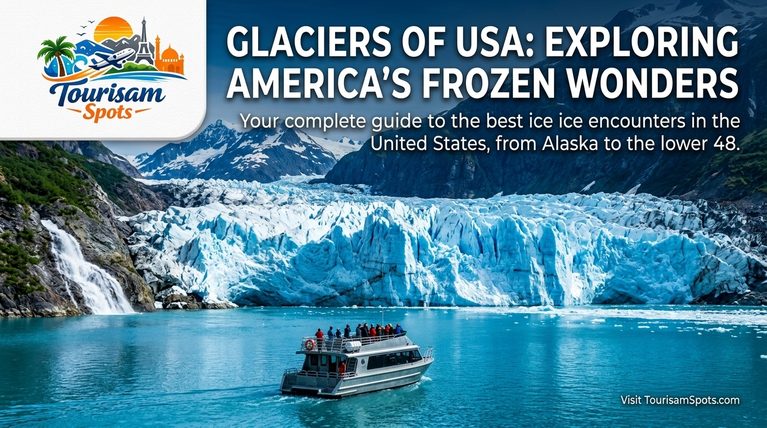

The USA’s glaciers are some of the best spectacular natural views on the continent. From the wild coast of Alaska to the high peaks of Montana, these rivers of ice carve the ground and excite people from around the world. If you’ve ever fantasized of standing before a wall of blue ice, this guide is for you. So below you will find the greatest places to go, what to do there and how to arrange a trip you will never forget.
Why Glaciers in the United States Are Worth the Trip
Glaciers exist in U.S. territory in at least seven states, but the bulk of the ice is in Alaska. Smaller glaciers remain in Washington, Montana, Wyoming, California, Oregon and Colorado. Each area has a different feel. In Alaska you have big scale and wild coasts. The lower states have simple road access and classic mountain scenery.
Many guests are shocked at the near proximity they may reach to the ice. Some glaciers are just a short walk from a parking lot. Others require a full day hike or a tiny plane. Whether you’re a fitness pro or a newbie, there’s a frozen wonder for your ambitions.
How Glaciers Form
In Glacier Formation, Snow accumulation is the beginning of the story. In Iceland, considerable snowfall falls on high-altitude plateaus and mountain summits. Over time, this snow becomes compacted into firn, and eventually into dense glacial ice.
This sluggish movement produces valleys, drops rock and sand, and creates magnificent landscapes. This is why Glacial Landscapes USA look so distinctive. You will observe deep U-shaped valleys, jagged mountains and green or milky lakes that are nourished by cold water. “You come here and you look at a landscape that was built over thousands of years.”
Famous Glaciers in USA You Should Know
When travelers discuss the famous glaciers in USA, some names crop up repeatedly. Here are a handful that should be on your list.
Mendenhall Glacier in Alaska:
This is one of the easiest large glaciers to access. It’s close outside the capital city and features a visitor center, short trails and a waterfall nearby. It has stunning view points and easy hike, so you should never miss.
Hubbard Glacier, Alaska:
This is one of the continent’s greatest tidewater glaciers. It flows toward the sea in Yakutat Bay and cruise guests love to watch enormous chunks of ice crash into the water.
Exit Glacier in Alaska:
Walk-in access to this glacier near the town of Seward. It’s a terrific alternative for families.
Grinnell Glacier in Montana:
Grinnell Glacier is one of the most frequented hikes in Glacier National Park. More concerned with all the spectacular sights surrounding you, the 2,500+ feet of elevation increase fly by in a flash. .
Emmons Glacier in Washington:
It comes from Mount Rainier and is the largest glacier in the lower forty-eight states in area.
Alaska Glaciers
Different types of glaciers exist in Alaska’s diverse glacial terrains.
The Heart of American Ice:
If you love ice, then Alaska is the place for you. The glaciers in Alaska cover tens of thousands of square miles and several run all the way to the ocean. The state has significantly more ice than all the other states together. If you can only see one place, go to Alaska.
Largest Glaciers in Alaska:
People always wonder what are the biggest glaciers in Alaska. Malaspina Glacier is notable for being so big.The fan shape is unusual, having developed as the glacier fanned out into a plain after being constricted by a valley. The Bering Glacier is likewise enormous. It is sometimes listed as the longest glacier in North America, running well over one hundred miles. They are distant locations, and most people see them from the air or from the coast, yet it’s hard to ignore their size.
Glaciers Near Juneau
Juneau’s backyard is home to the fifth largest icefield in the Western Hemisphere, the Juneau Icefield, which spans 1,500 square miles straddling the line between Alaska and Canada. Visitors can hike to Nugget Falls, paddle about Mendenhall Lake or take a guided cruise to town get up close to the ice. Helicopter excursions also land on neighboring icefields where you can walk on the surface with a guide. It’s the simplest method for many people to enjoy a real glacier encounter without long hikes.
Tidewater Glaciers
Tidewater glaciers are glaciers that flow out and end in the sea. They are part of a class of glaciers called calving glaciers, because their major mode of ice loss is iceberg calving, not surface melting. Calving icebergs are responsible for up to 70% of the world’s annual mass transfer from glacial regions to the ocean. Some of the best areas to witness tidewater glaciers are Glacier Bay, Kenai Fjords National Park, Prince William Sound and Yakutat Bay. The small boat tours are the greatest way to get up close, with numerous companies providing half day and full day trips.
Sanford Icefield and Sargent Icefield
Icefields are huge sheets of ice that feed multiple glaciers simultaneously. The Sanford Icefield is part of the rugged Wrangell Mountains region of Alaska, an area of towering volcanoes and deep wilderness. It is a spot for seasoned travelers who prefer remote journeys.
The Sargent Icefield is found in the Kenai Mountains in southern Alaska. It is one of a number of icefields feeding glaciers moving toward Kenai Fjords National Park and the adjacent coast. From a scenic flight, one gets a sense of the size and quietness of the frozen planet as one looks out onto vast icefields. Both areas explain why USA glaciers and ice fields are such a resource for photographers and adventurers.
US Glacier National Parks
Several US glacier national parks protect the best ice in the country. Here are the top ones to think about.
Glacier National Park in Montana:
The most well-known name on the list is this park. It has picturesque drives, alpine lakes and some of the best day treks in the country.
Denali National Park in Alaska:
This park has the highest point in North America and is full of giant ice rivers, wild life and snow-capped mountains.
Kenai Fjords National Park in Alaska:
Here the ocean meets ice. You can witness tidewater glaciers, sea otters and whales, all in one day .
Glacier Bay National Park in Alaska:
This park, best explored by boat, is famed for its tranquil water and towering ice walls.
Mount Rainier National Park in Washington:
More than two dozen glaciers cover this huge volcano, many visible from road views.
Glaciers in Glacier National Park and Montana Glaciers
Glacier National Park is a draw for visitors to northern Montana because of the glaciers. In 1850 there were about hundred and fifty glaciers in the park. Today just over two dozen are large enough to be considered active. A stark warning of how swiftly the climate is changing.
But Montana’s glaciers are still stunning. The two most popular hikes are to Grinnell Glacier and Sperry Glacier. The Grinnell trail winds past waterfalls and fauna, and gets you a look at a dazzling blue lake underneath the ice. The best time to go is in the summer, when the trail is generally safer from early July to September. One of the busiest parks in the country, so book your park access and hotel early.
Glaciers in Denali National Park
There are some big glaciers in Denali National Park. The Kahiltna Glacier, about forty miles long, is the major path for climbers going to the top of Denali. The Ruth Glacier carves a massive canyon called the Great Gorge, one of the deepest in North America. Most people don’t even have to ascend to get the views. Talkeetna has flightseeing tours that fly over the ice and even land on a glacier for a short walk. It’s a bucket list moment for many travelers.
Glaciers in California and Glaciers in Wyoming
Glaciers do not just exist in the extreme north. You might be surprised by California glaciers. The Palisade Glacier in the Sierra Nevada is the biggest in the state and a preferred goal for strong hikers and climbers. Several glaciers, notably Whitney Glacier and Hotlum Glacier, also reside on Mount Shasta and are visible from numerous highways in northern California.
In Wyoming, glaciers are primarily restricted to the Wind River Range and the Teton Range. Gannett Glacier is the largest single glacier in the American Rocky Mountains. On walks in Grand Teton National Park, you can see the glacier below the Grand Teton. If you want mountain views without the trip all the way to Alaska, these are good possibilities.
Best Glaciers to Visit in USA
If you are planning your first vacation here is a fast list of the greatest glaciers to visit in the USA for various travel styles.
- For easy access, choose the Mendenhall Glacier in Juneau or Exit Glacier near Seward.
- For a classic day of hiking, visit Grinnell Glacier in Montana.
- Select a boat tour to Kenai Fjords or Glacier Bay.
- For a great adventure, take a flightseeing tour over Denali or the Wrangell Mountains.
If you are taking a road trip, pick between Mount Rainier and Mount Shasta.
Glacier Hiking USA and Glacier Trekking USA
Glacier trekking in the USA is popular as there are so many routes to overlook ice. A few of the routes are easy walking for beginners. Others are long and steep and rocky. Check trail conditions ahead of time, bring water and layers and get an early start in the day.
Glacier trekking in the USA is another level. This generally involves walking on the ice itself, with a professional guide. You’ll use an ice ax, wear crampons on your boots and learn how to move securely on a frozen surface. Guided trekking expeditions are available around Juneau, Seward, Valdez and Matanuska Glacier. Never walk on a glacier by yourself. Crevasses may be hidden under snow and are quite dangerous.

Hikes and Ice Climbing
Hikes and Ice Climbing is a great combo for adventure enthusiasts. Beginners can take a half day ice climbing class, and guides teach the basics on a safe wall of blue ice. More advanced climbers can go on multi-day outings on larger glaciers and icefields. Popular ice climbing destinations include Matanuska Glacier, Valdez, and the ice caves in Juneau when conditions are good. Find a good tour business and read the reviews before you pay. Good gear and good guides make a difference.
Glacier Adventure Ideas
There’s plenty of ways to plan a glacier excursion. You may kayak amid floating icebergs, take a helicopter ride to a remote icefield or even dog sled on a glacier in the summer. Or take a trip to see tidewater glaciers, or camp at a mountain lake fed by melting ice. Choose the style that suits your budget, time and comfort level.
Glacier Wildlife
Glacier fauna makes your experience even more magical. Look for humpback whales, orca, sea otters, harbor seals and puffins along the Alaska coast. Bald eagles like to perch atop icebergs. On land you may see bears, moose, mountain goats and wolves. Glacier National Park: Look for mountain goats, big horn sheep and grizzly bears. Keep a safe distance, carry bear spray in bear area and never feed wild animals.
Glacial Lakes
The colors of glacial lakes are unlike any you will ever see. Glacial flour is the fine rock dust that is suspended in the water and makes it a vivid turquoise or milky blue tint. Good examples are Mendenhall Lake near Juneau, Jenny Lake in Wyoming and a lot of lakes in Glacier National Park. These lakes are great for photography, paddling and quiet picnics. The water is very chilly and not advised for swimming.
Melting Glaciers and Why Your Visit Matters
Glaciers are melting. Some tiny American glaciers could disappear in the next few decades, and more are receding every year. The opportunity to view them today is a unique chance to witness something that future travelers might not be able to enjoy in the same way.
You can assist by traveling responsibly. Stick to defined trails, pack out your waste, choose eco friendly tour operators, and support local guides and small businesses. Your visit might also help generate awareness and support for park protection.
Best Time to Visit
The best time to visit most glacier areas is from late spring to early October. June to August provide the longest days and hottest weather in Alaska. The upper routes in Montana and Wyoming generally are free of snow from July to September. Bring warm clothing, waterproof shoes, sunglasses and sunscreen. The light reflects off ice and snow.
Plan Your Trip with Tourisam Spots
Can’t wait to view these frozen beauties yourself? For travel information, location suggestions and planning aid visit https://tourisamspots.com/ Our experts can help you pick the right site, the right season and the appropriate strategy, from an easy day of sightseeing to a brave adventure on the ice.
Tourism Spots: Glaciers of USA
Tourisam Spots is a travel based platform for Exploring Beautiful Glaciers of USA, Beautiful California Snow Mountains and Amazing Places in America. We provide excellent Content Writing and Guest Posting services for travel brands, bloggers, businesses and websites wishing to share relevant tales to a wider audience. Whether you are looking for snowy mountain views, inspiring travel guides or want to promote own material, Tourisam Spots is the place to discover, share and interact. Write For Us to share your travel insights or Contact Us for guest posting and content writing possibilities.
Final Thoughts
America’s glaciers are the place to get experiences you cannot find anyplace else. From snow capped mountains to dazzling blue lakes and roaring tidewater barriers. “Every glacier has a story to tell, and each visit gives you a new lens to view the natural world. Book early and start planning today to visit the frozen marvels of the USA.
FAQS
1. What are the most popular glaciers in the USA?
Some of the most famous glaciers in the United States are located in Alaska, Washington, and Montana. Popular examples are Mendenhall Glacier, Matanuska Glacier, Exit Glacier, and the glaciers of Glacier National Park.
2. How safe are glacier tours?
Guided glacier tours can be a safe way to experience these environments provided they are led by trained professionals. There are crevasses, unstable ice, and fluctuating weather conditions on glaciers thus visitors should heed official safety recommendations.
3. Why are glaciers important?
Glaciers store fresh water, sculpt the terrain, support ecosystems, and provide important clues about Earth’s climatic past. Their shifts also assist scientists in understanding broader environmental patterns.