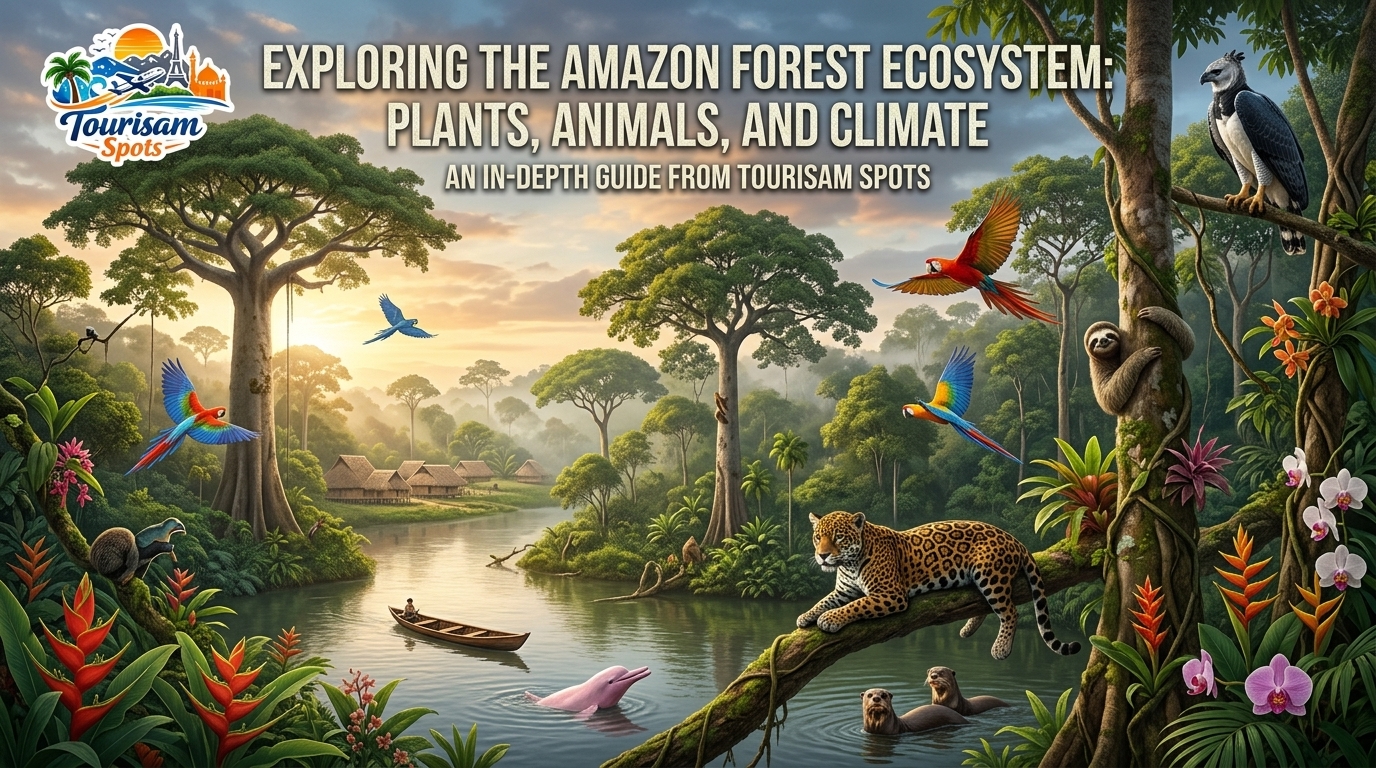
The Amazon Forest is one of the great natural marvels of the Earth. One of the largest rainforests in the world, the Amazon covers South America and plays a key role in stabilizing the global temperature, biodiversity and ecological balance. This huge green space houses millions of plants, thousands of animal species and unique ecosystems that continue to attract scientists, travelers and nature lovers.
The Amazon Forest ecosystem is not only a collection of trees. It is a complex web of interacting plants, animals, rivers, soil, climate and people. Learning about this beautiful rainforest will allow us to appreciate why it is so important to maintain it for the future of our world.
Where is the Amazon Rainforest Located?
The Amazon Rainforest, known as the “lungs of the Earth”, is a large and unique ecosystem spread over 6.7 million square kilometers and present in nine nations in South America. This amazing natural wonder is not just a treasure chest of biodiversity but also plays a vital role in controlling the global temperature.
The Amazon River runs through this area, creating a huge system of rivers and streams that supports a tremendous variety of plant and animal life. The rainforest is immense, millions of square kilometers enormous. It impacts on weather patterns much beyond South America .The Amazon’s uniqueness is its position as a tropical habitat with significant rainfall, mild temperatures and tremendous biological variety.
Amazon Forest Ecosystem and Its Importance
The Amazon Forest environment is one of the most complicated ecosystems on the planet. There are many layers of plants, rivers, marshes and woods that are home of many living beings.The rainforest is a natural temperature regulator, as it takes in carbon dioxide and gives off oxygen through photosynthesis. It also helps affect rainfall patterns by putting moisture into the atmosphere.
The Amazon environment sustains:
- Thousands of species of plants.
- Millions of insects and micro-organisms
- hundreds of species of mammals
- There are large populations of birds, reptiles and amphibians
- Indigenous peoples whose livelihood depends on the forest
Each member of this ecosystem plays a part. Trees offer shelter, plants provide food, rivers sustain aquatic life, and animals assist scatter seeds across the forest.
Amazon Rainforest Wildlife: A World Full of Diversity
Some of the richest and most diversified animals on Earth are found in the Amazon jungle. Scientists believe many species in the jungle have not even been discovered yet.The thick greenery offers good protection and food for animals. The Amazon is teeming with amazing species, from strong predators to brightly colored birds.
Some of the well known animals of the Amazon include:
- Jaguars
- Sloths (Click to enlarge)
- Great River Otters
- Pink dolphins of the river.
- Constrictor
- Harpie Eagles
- Capybaras
- Poison dart frog
- Macaws.
Since there are numerous types of environments, some parts of the rainforest can support different types of animals. Some creatures reside high in the tree canopy and others live near rivers or on the forest floor.
Animals Found in the Amazon Rainforest
The Amazon is the home to some of the most distinctive varieties of wildlife in the world.
Jaguar
The jaguar is one of the apex predators of the Amazon rainforest. These big cats are superb swimsuits and hunters. Their habitat includes a range of settings from tropical rainforests and seasonally flooded wetlands such as the Pantanal, to grasslands and even the arid scrub area or deserts at the northern edge of their range.
Sloth
In Spanish the word for sloth is “perezoso,” which means “lazy.” Sloths are known for their sluggish movements and tree-based lifestyle. Most of their life is spent hanging on branches munching on leaves.
Amazon River Dolphin
The pink river dolphin is one of the most interesting aquatic species in the jungle. These dolphins reside in rivers of the Amazon, and are adapted for conditions of fresh water. The pink river dolphin is different from the gray or tuxuci (Sotalia fluviatilis) river dolphins that are more similar to sea dolphins with their bottlenoses and jumping out of the water.
Harpy Eagle
The national bird of Panama is the harpy eagle. The harpy eagle is among the most powerful raptors. It utilizes its formidable claws to hunt monkeys and other animals that live in the forest canopy.
Amazon Rainforest Plants and Trees
The Amazon rainforest plants are crucial for the health of the ecosystem. There are thousands of plant species in the rainforest including medicinal plants, plants with flowers, vines and enormous trees.
Some important flora of the Amazon rainforest are:
- Rubber trees
- The cacao plants
- Brazil nut trees.
- Orchids
- Passionflowers
- Heliconias
Many Amazonian plants have been used by indigenous peoples for food, medicine, and traditional customs.
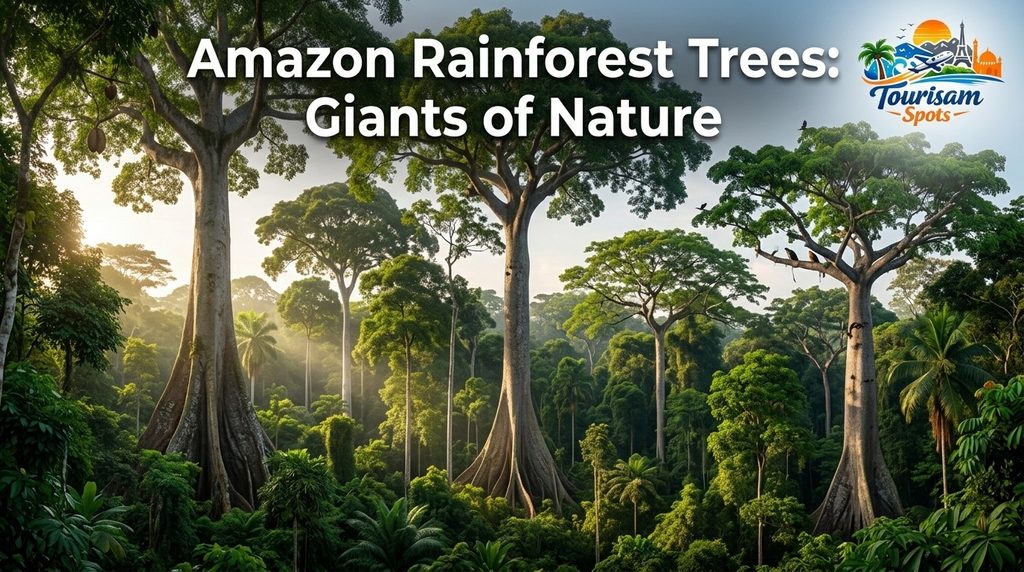
Amazon Rainforest Trees: Giants of Nature
The trees of the Amazon rainforest are the foundation for this magnificent ecosystem. Some trees can grow to be over 60 meters tall and generate a dense canopy which inhibits sunlight from reaching the forest floor.
Important Amazon Trees:
Brazil Nut Tree
The Brazil nut tree yields nutritious nuts which are harvested and sold around the world. These trees depend on some animals for their pollination and seed dispersal.
Rubber Tree
The rubber trees were crucial to the history and economy of the Amazon region. Their natural latex was gathered to create rubber items in the traditional way.
Kapok Tree
The kapok tree is among the tallest trees in the rainforest. Its enormous branches make homes for many birds, insects and other animals.
Amazon Rainforest Climate
The climate of the Amazon rainforest is warm, humid, and wet for much of the year. Average temperatures normally stay between 25 °C and 30 °C.Rain forest is a very wet place. It rains a lot . This makes the plants grow thick and lush. The sun, the heat and water together provide the ideal Cocktail for plant development.
Amazon climate has 2 primary seasons:
Wet Season
During the rainy season, heavy rains cause rivers to flood and form temporary wetlands. Many animals depend on these habitats for food and reproducing.
Dry Season
The dry season receives less rain but because the area is so humid and has many water systems much of the rainforest is still green.
Amazon Rainforest Adventure and Tourism
An Amazon rainforest tour is an opportunity for travelers to explore one of the most amazing natural settings in the world. Guided trips are available to rivers, woods and wildlife areas.
Some common activities are:
- Trekking in the jungle
- Wildlife spotting.
- Riverboat cruises
- Birdwatching
- Canoeing (or Canoeing)
- Travel to indigenous communities
- Nite jungle tours
Amazon Rainforest Tourism Tourism also benefits the economy of the local populations and conservation. Responsible tourism creates awareness on the value of the forest and helps to protect it.
Best Time to Visit Amazon Rainforest
The greatest time to visit the Amazon jungle may depend on the type of experience people are looking for.
Dry Season (June to November)
Many people also choose to hike and watch wildlife during the dry season as routes are more accessible. Lower water levels also open up some locations for easier exploration.
Wet Season (December to May)
The rainy season brings about spectacular river sceneries, and allows visitors to venture deeper in flooded forest areas by boat.
Each season presents a new viewpoint on the natural beauty of the Amazon.
Places to Visit in Amazon Rainforest
There are many great sites in the Amazon rainforest that travelers can visit to appreciate its splendor.
Some of the most popular destinations include:
Manaus, Brazil
Manaus is one of the main gates to the Amazon. Visitors can explore neighboring forests, rivers and eco-lodges.
Tambopata National Reserve, Peru
This protected area offers fantastic wildlife experiences and stunning rainforest landscapes.
Yasuni National Park, Ecuador
Yasuni is famous for its unique biodiversity and protected natural environments.
Amazon River
The Amazon River is a place to witness wildlife, local communities and spectacular landscapes.
Causes of Amazon Deforestation
Despite its importance, the Amazon is under tremendous peril. The causes of Amazon deforestation are human activities that take away forest areas.
The main reasons are:
- Farmland expansion
- Cattle ranching
- Illegal logging 4.
- Mining operations
- Road building
- Wildfires
Deforestation destroys the habitat of wildlife and disrupts the natural balance of the ecosystem.
Effects of Amazon Deforestation
The impacts of deforestation in the Amazon are substantial and affect wildlife and humans alike.
The major effects are:
- Biodiversity loss
- carbon emissions increased
- Climate Change Effects
- Loss of animal habitats
- Shifts in rainfall patterns
- Indigenous Peoples and their Threats
It is important to protect the Amazon because if this rainforest is damaged, it can alter the environmental circumstances of the world.
Endangered Amazon Rainforest Animals
Many endangered creatures of the Amazon Rainforest are under threat by human activities and habitat destruction.
Some of the endangered species are:
- Jaguar.
- Giant Otters
- Manatee of the Amazon
- Black spider monkey Harpy eagle
Conservation efforts, protected areas and responsible tourism are vital for protecting these species.
Tourisam Spots: Explore the Amazon Forest Ecosystem
Tourism Spots is your trusted resource for finding exciting things to do in the Amazon Forest Ecosystem, to finding the greatest places to visit on Christmas, we offer useful travel guides, inspiring stories, and useful tips to help travelers find unforgettable destinations all around the world. At Tourism Spots, we are committed to providing professional Guest Posting & Content Writing services. Our goal is to enable tourism companies, enterprises, and websites to establish their authority with quality content. Take a look at our About Us page to know more about our travel vision and check out our Contact Us page to get in touch for collaborations.
Conclusion
The Amazon Forest is a natural treasure of inestimable value, sustaining a tremendous diversity of species. Its vegetation, animals, rivers and climate systems are among the most important on the planet.Whether it’s Amazon rainforest creatures or Amazon rainforest vegetation, this extraordinary ecosystem will show you the beauty and intricacy of nature. But it has issues such as deforestation that threaten its future.We need to be sustainable, we need to be cognizant of the need to protect the Amazon, and we need to work together as a global community. If we care about this amazing jungle we can help protect it’s biodiversity and future generations can continue to discover it’s wonders.
FAQS
1. What is the environment of the Amazon Forest?
The Amazon Forest ecosystem is a natural system that is complicated in the sense that it has interactions of trees, rivers, plants, animals, soil and climate. It is one of the most diversified ecosystems on the planet, and it plays a vital part in the regulation of the global temperature and maintaining innumerable species.
2. Where is the Amazon rain forest located?
The Amazon Rainforest is found in South America, covering sections of Brazil, Peru, Colombia, Bolivia, Ecuador, Venezuela, Guyana, Suriname and French Guiana. Brazil has the biggest part of the jungle.
3. Why is the Amazon Rainforest so important?
The Amazon Rainforest is essential because it is home to millions of species, stores vast amounts of carbon, serves to regulate rainfall patterns and provides resources and livelihoods for many indigenous populations.