
Introduction to Sheesh Mahal
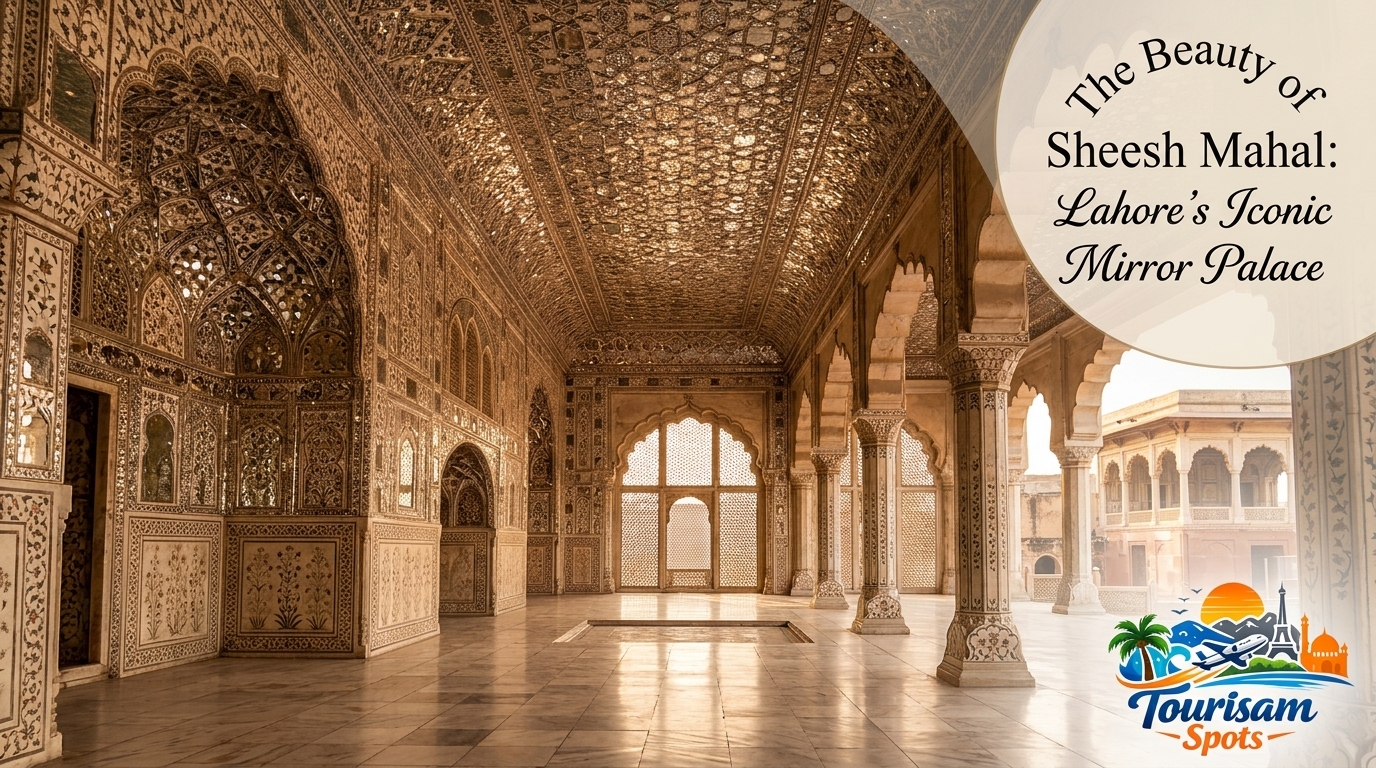
The Sheesh Mahal, also known as the “Palace of Mirrors,” is among the most magnificent spaces the Mughals ever constructed. Nestled within the Lahore Fort, it is illuminated by thousands of tiny mirrors that shimmer in even the dimest light. This palace is a must-see for anyone organising a trip related to heritage tourism in Lahore.
The Mughal historical sites in Lahore, which has long been referred to as the “heart of Pakistan,” tell the tale of emperors, poets, and skilled architects. The Sheesh Mahal is one of the most stunning locations in Lahore because of its exquisite craftsmanship and dazzling glitter. This guide will teach you about its history, what makes its design unique, fascinating facts, visiting hours, and how to organise the ideal trip.
Sheesh Mehal: Tourisam Spots
Discover the beauty of Sheesh Mahal and the breathtaking Skardu Mountains with Tourisam Spots, your platform for travel inspiration, tourism insights, and unforgettable destinations. We provide opportunities for Guest Posting and Backlinks to help travel bloggers, businesses, and content creators grow their online presence. Explore amazing tourist attractions, share your travel experiences, and discover exciting destinations around the world. Visit our Write For Us page to contribute travel articles and collaborate with us, or Contact Us to learn more about our guest posting and backlink services.
The Royal History of Lahore and the Mirror Palace
The Mughals were the pinnacle of Lahore’s royal history. In 1566, Emperor Akbar erected the Lahore Fort’s sturdy brick foundations. In the northwest corner of the fort, his son Jahangir added the Shah Burj, also known as King’s Pavilion. Then came Shah Jahan, the monarch who cherished exquisite detail and white marble.
In 1631–1632, Shah Jahan constructed the Sheesh Mahal within the Shah Burj. The royal family and their closest assistants were the only people allowed in the hall. According to a well-known local tradition, it was intended for Mumtaz Mahal, his adored queen, who had a dream of sleeping among the stars. Sadly, she passed away in 1631 before the palace was completed. This tale is considered legend by historians, yet it gives each visit a romantic undertone.
The Shah Burj became one of the Sikh ruler Maharaja Ranjit Singh’s favourite places centuries later, and he added his own features, such as painted murals. The Sheesh Mahal is an important component of Pakistan’s cultural legacy since the Lahore Fort and Shalimar Gardens were inducted into the UNESCO World Heritage List in 1981.
Sheesh Mahal Architecture: A Masterpiece of Mughal Design
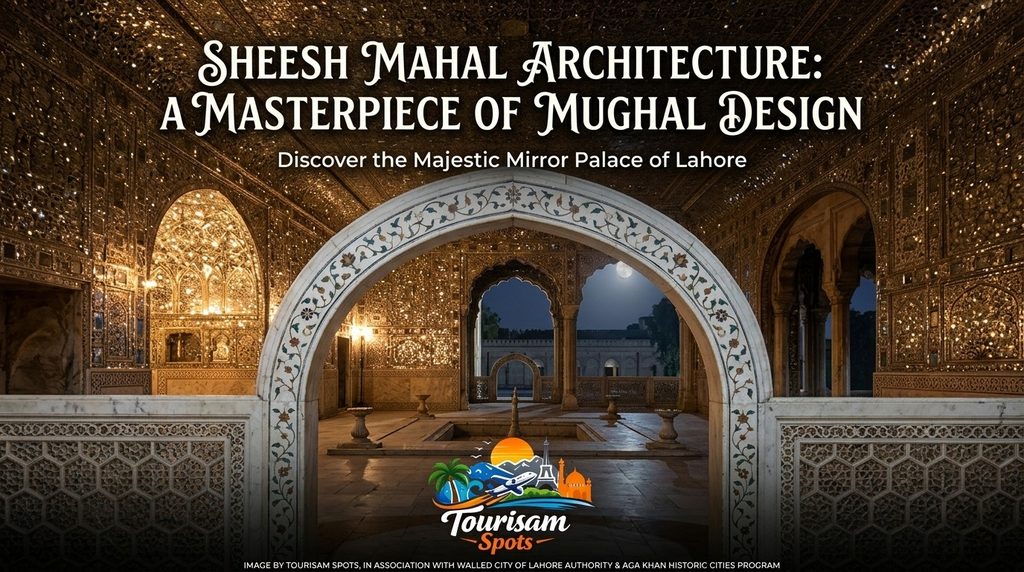
Sheesh Mahal architecture is a perfect example of Mughal architecture Pakistan can be proud of. The building is a large, lofty marble hall with several smaller rooms at the back. It opens onto a courtyard, which once had fountains and a marble platform.
Key design features include:
- White marble walls and pillars – the signature material of Shah Jahan’s era
- Pietra dura inlay – semi-precious stones set into marble to form flowers and vines
- Carved marble screens (jali) – letting in light and breeze while keeping privacy
- Fresco paintings – colourful patterns on walls and ceilings
- Multiple decorative crafts – experts note that as many as five different crafts decorate the building
The Mirror Work of Sheesh Mehal
Sheesh Mehal’s mirror work is what makes it so well-known. Thousands of tiny convex glass and mirror shards are placed into plaster in intricate designs for this craft, known as aina kari. The ceiling resembles a starry nite sky.
Every mirror catches and reflects a tiny light, such as a phone torch, making the entire space shimmer. Moonlight reflecting off the outdoor fountains would have created a gentle, shimmering radiance in the hall during the Mughal era. This delicate work has been painstakingly preserved and repaired by restoration teams, such as the Walled City of Lahore Authority and the Aga Khan Historic Cities Program.
Why Is Sheesh Mahal Famous in Lahore?
Why is Sheesh Mahal well-known in Lahore? In one location, it blends rare workmanship, royal history, and unadulterated visual enchantment. Mughal mirror craftsmanship of this size and calibre is uncommon in South Asian architecture. It is a feature of practically every Lahore tourism itinerary and one of the most photographed locations in the Lahore Fort.
Interesting Facts About Sheesh Mahal Lahore
Here are some interesting facts about Sheesh Mahal Lahore that most visitors don’t know:
- It was a private royal space. Only the emperor, his family and trusted courtiers could enter.
- It sits inside an older building. The palace is part of the Shah Burj block, which was started under Jahangir.
- It has Sikh-era art too. Murals from the time of Maharaja Ranjit Singh still survive in parts of the Shah Burj.
- It inspired other palaces. Similar mirror halls appear in Agra Fort and later at Amber Fort in India.
- It’s part of a UNESCO site. It is protected as part of the Lahore Fort, a World Heritage Site since 1981.
- It is linked to a love story. Legend connects it to Mumtaz Mahal, the queen who later inspired the Taj Mahal.
Sheesh Mehal Location, Area and Visiting Hours
The Sheesh Mehal location is the northwest corner of the Lahore Fort, inside the Shah Burj quadrangle, in the historic Walled City of Lahore. The table below gives you the key visitor details at a glance.
| Detail | Information |
| Sheesh Mehal location | Shah Burj, northwest corner of Lahore Fort, Fort Road, Walled City, Lahore |
| Sheesh Mehal area | Walled City of Lahore; the Lahore Fort complex covers about 20 hectares |
| Built | 1631–32, under Emperor Shah Jahan |
| Sheesh Mehal visiting hours | Lahore Fort opens daily, about 8:30 AM to 5:30 PM in winter and 8:30 AM to 6:00 PM in summer; Sheesh Mahal may close earlier |
| Tickets | Fort entry ticket plus a separate Sheesh Mahal ticket; prices differ for Pakistanis and foreigners |
| Night visits | Night tourism launched in October 2026; reported prices are Rs 1,000 for Pakistani adults, Rs 500 for children aged 3–10 and Rs 2,000 for foreigners |
| Managed by | Walled City of Lahore Authority |
| Time needed | 2–3 hours for the whole fort |
| Best time to visit | November to March, early morning |
Explore More Mughal Heritage Lahore Is Known For
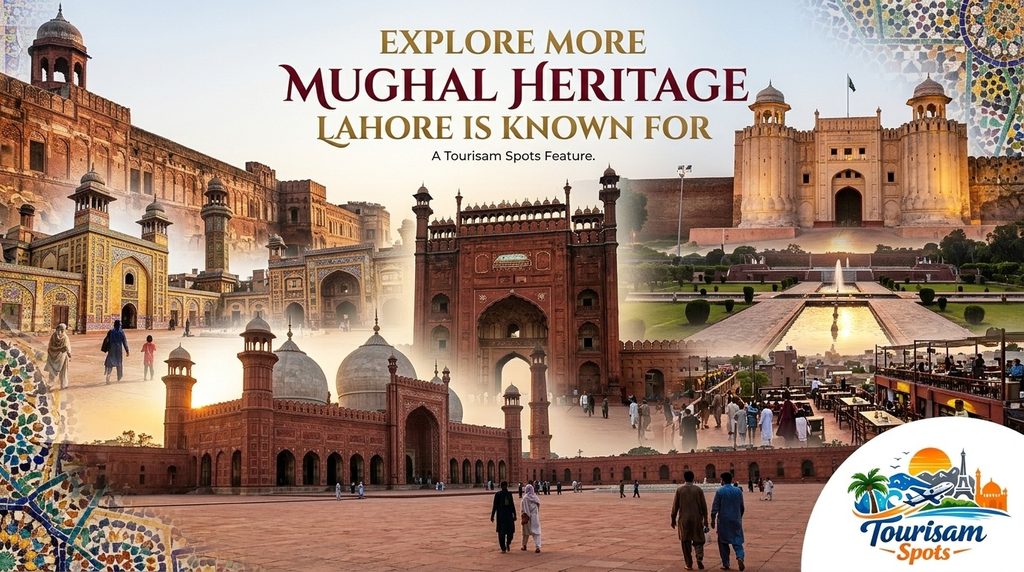
The Sheesh Mahal is just one stop on a trail of Mughal heritage Lahore has protected for centuries. Combine it with these nearby historical places in Lahore for a full day of exploring.
Lahore Fort
About 21 structures, including the Diwan-e-Aam, Diwan-e-Khas, Naulakha Pavilion, and Moti Masjid, are located within the Lahore Fort, also known as Shahi Qila. The Picture Wall, a massive exterior wall decorated in vibrant tile mosaics, is not to be missed.
Badshahi Mosque
Emperor Aurangzeb constructed the Badshahi Mosque in 1673, directly across from the fort’s Alamgiri Gate. It is among the largest mosques in the world thanks to its enormous courtyard, marble domes, and red sandstone walls. It’s free to enter, but please dress modestly.
Shalimar Gardens Lahore
Shalimar Gardens Lahore, a traditional Mughal park with terraces, water channels, and hundreds of fountains, was constructed by Shah Jahan in the 1640s. It is a serene spot to conclude the day and has the same UNESCO status as the Lahore Fort.
Other Nearby Gems
- Wazir Khan Mosque – famous for its colourful tile work
- Shahi Hammam – a restored Mughal bathhouse near Delhi Gate
- Royal Trail (Shahi Guzargah) – the heritage path from Delhi Gate to the fort
- Fort Road Food Street – rooftop dining with views of the mosque and fort
Tips for Visiting Sheesh Mahal
- Arrive early. Mornings are cooler and less crowded, and the light is best for photos.
- Hire a licensed guide. Guides near the Alamgiri Gate share stories you won’t find on signboards. Agree on the price first.
- Carry cash. Some counters now take cards, but cash in Pakistani rupees is still the safest option.
- Wear comfortable shoes. The fort is large, with uneven paths and steps.
- Respect the site. Don’t touch the mirror work or marble inlay, as it is very delicate.
- Plan a heritage day. Visit the fort and Sheesh Mahal in the morning, the Badshahi Mosque at midday and Food Street in the evening.
Plan Your Visit to the Palace of Mirrors
The Sheesh Mahal is more than just a stunning space. It offers a glimpse of Lahore’s opulence, artistic creations, and Mughal era. It embodies everything that makes Lahore tourism so unique, from its shimmering mirror work to its marble pillars and love stories.
Are you prepared to witness it for yourself? Experience the best of Pakistan’s Mughal past in a single, amazing day by scheduling a guided Lahore heritage trip with stops at the Lahore Fort, Sheesh Mahal, Badshahi Mosque, and Shalimar Gardens.