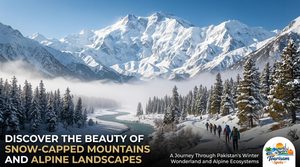
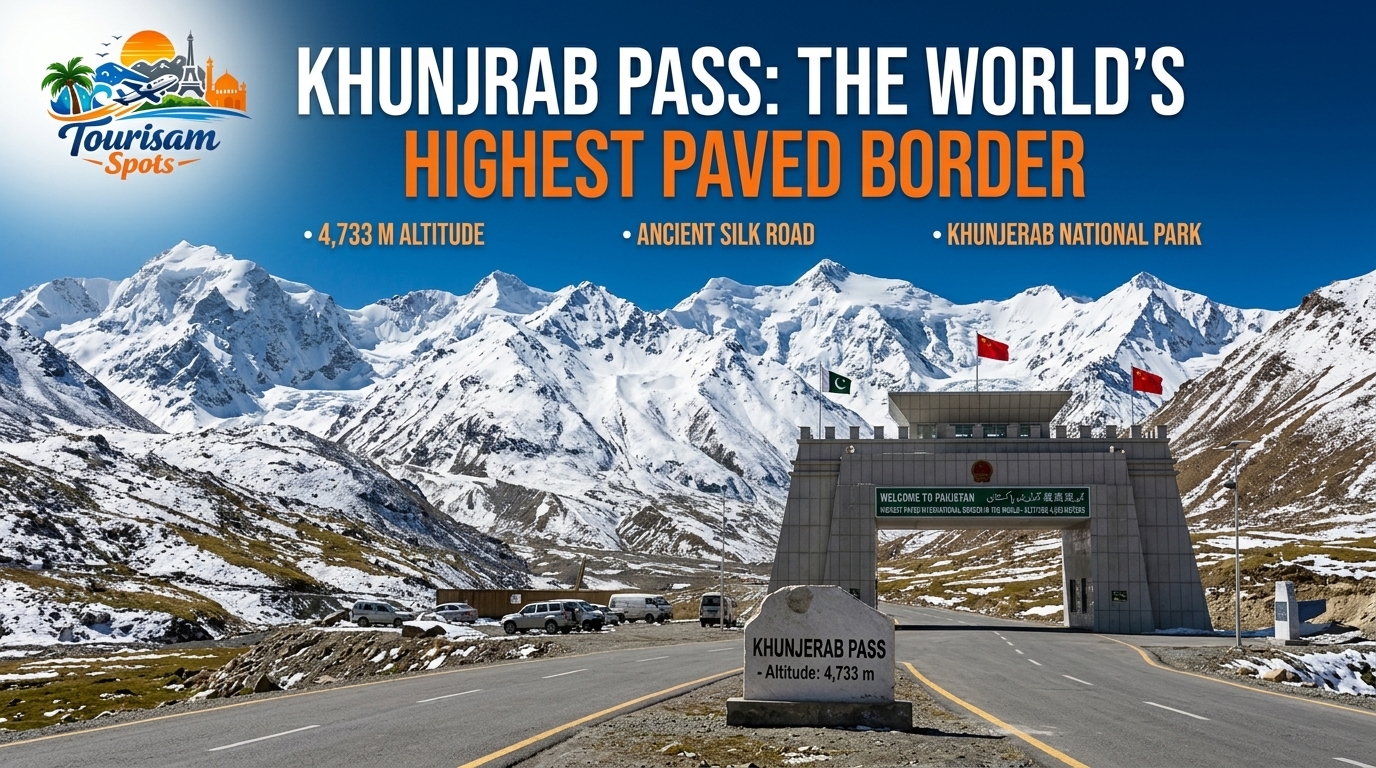
The Khunjrab Pass is one of those places that feels almost unbelievable the first time you see it tucked away in the extreme north of the country. Snow-capped peaks rise up on all sides, the air gets thin and harsh, and a modest stone gate marks the very spot where Pakistan stops and China begins. Few places in northern Pakistan can match the grandeur and stillness of the mountains here.
Where Is Khunjrab Pass Located
The Khunjrab Pass is in the Gilgit Baltistan area, near the far northern extremity of Pakistan, in the Karakoram mountain range. It is the boundary of Pakistan and China . It connects the Hunza valley in Pakistan to the Xinjiang province of China on the other side . The pass is surrounded by Khunjrab National Park, a high-altitude protected region with spectacular scenery and uncommon fauna like the elusive snow leopard and Marco Polo sheep.
Getting to this area is part of the trip. The route takes tourists through some of the most magnificent portions of the Karakoram Highway, past glaciers, terraced towns and sheer rock cliffs that seem to hem the road in from either side.
Khunjrab Pass Altitude and What It Feels Like Up There
The Khunjrab Pass is situated at an elevation of over four thousand seven hundred meters above sea level, which makes it one of the highest paved international boundaries in the world. The air is thin at this level and visitors sometimes feel breathless even standing still. A short walk will leave you considerably exhausted if you are not acclimated to high altitude travel.
The view from the top is stark and stunning. The brown slopes roll away to patches of snow, and on a clear day you can see distant peaks in all directions. It is a spot that makes you feel little in the face of the scale of the Karakoram range.
A Short History of Khunjrab Pass
The history of Khunjrab Pass stretches back centuries, long before it became a modern paved highway. This route was once part of the ancient Silk Route, the network of trading paths that connected China, Central Asia, and South Asia. Caravans loaded with silk, spices, and other goods once crossed this same high altitude corridor, braving harsh weather and difficult terrain to keep trade moving between empires.
In more recent history, the pass gained new significance with the construction of the Karakoram Highway, a joint project between Pakistan and China completed in the late twentieth century. This engineering achievement turned a remote mountain crossing into a functioning international border, opening the region to trade, tourism, and closer ties between the two countries.
Crossing Khunjrab Pass Into China
Crossing Khunjrab Pass is possible for travelers with the right documentation, though it works differently depending on whether you are simply visiting the pass or continuing on into China. Many tourists travel up to the border point itself as a day trip from Hunza or Sost, take photos at the marker, and then head back down without crossing.
For those actually traveling from Pakistan to China, the crossing involves passing through official checkpoints on both sides. The Khunjrab Port on the Pakistani side and the matching facility on the Chinese side handle passport control, customs, and vehicle checks. Travelers heading into China from this direction should have their visas and paperwork arranged well in advance, since facilities at this remote crossing are limited and formalities cannot be completed on the spot.
The Role of Sost Border in the Journey
Before reaching the actual pass, most travelers pass through Sost, a small town that serves as Pakistan’s last major settlement before the Chinese border. Sost Border functions as the customs and immigration point for anyone officially crossing into China, and it is also where most trips to Khunjrab Pass day trips begin or end.
Sost has basic hotels, food options, and transport connections, making it a practical base for travelers who want to explore the pass without pushing all the way to Hunza and back in a single day. For anyone planning international travel through this route, Sost is where the formal exit process from Pakistan actually takes place.
Opening Hours and Seasonal Access
Khunjrab Pass opening hours do not stay the same all around the year and this takes many first time tourists by surprise. Within the warmer months the border is usually open normal hours for daily trade and travel with cars and people being able to cross within a specified time daily.
Seasonal variation substantially affects access. Snow can be heavy in the winter months, often making the road inaccessible, and the border might be closed for long periods at a time when conditions become too unsafe for cars. Weather at this altitude can change the schedule with little warning, so travelers should always verify current opening hours and border status before organizing a journey.
Khunjrab Pass Weather and Snow Fall
Khunjrab Pass weather is shaped almost entirely by its extreme altitude. Even in summer, temperatures at the top remain cool, and layers are essential no matter what season you visit. Winters bring heavy snowfall that can bury the road completely, cutting off the pass from regular traffic for months at a time.
Because of this, weather is one of the biggest factors in planning any visit. Sudden temperature drops, strong winds, and unpredictable snow showers are common even outside the coldest months, so travelers should always come prepared with warm clothing regardless of when they visit.
Best Time to Visit Khunjrab Pass
The best time to visit Khunjrab Pass is generally between May and September, when the snow has cleared enough for the road to stay open and temperatures are more manageable. July and August tend to offer the most stable weather, with clearer skies and easier travel along the Karakoram Highway.
Visiting outside this window is possible in some years, but travelers take on a much higher risk of road closures, sudden snow fall, and limited services along the way. Anyone planning a trip to Khunjrab Pass should build flexibility into their schedule, since even summer weather at this altitude can change quickly.
Things to Do in Khunjrab Pass
The major attraction is crossing the border and getting a picture at the marking, but there are a few things to do at Khunjrab Pass that make the journey worth it. Many visitors come to view wildlife and Khunjrab National Park is home to a number of uncommon high altitude species. On occasion, lucky patient tourists will have the chance to spot ibex or Marco Polo sheep or, if they are lucky, a faraway snow leopard. There’s also something to enjoy for birdwatchers, with golden eagles and other high altitude raptors occasionally seen circling overhead in the valley.
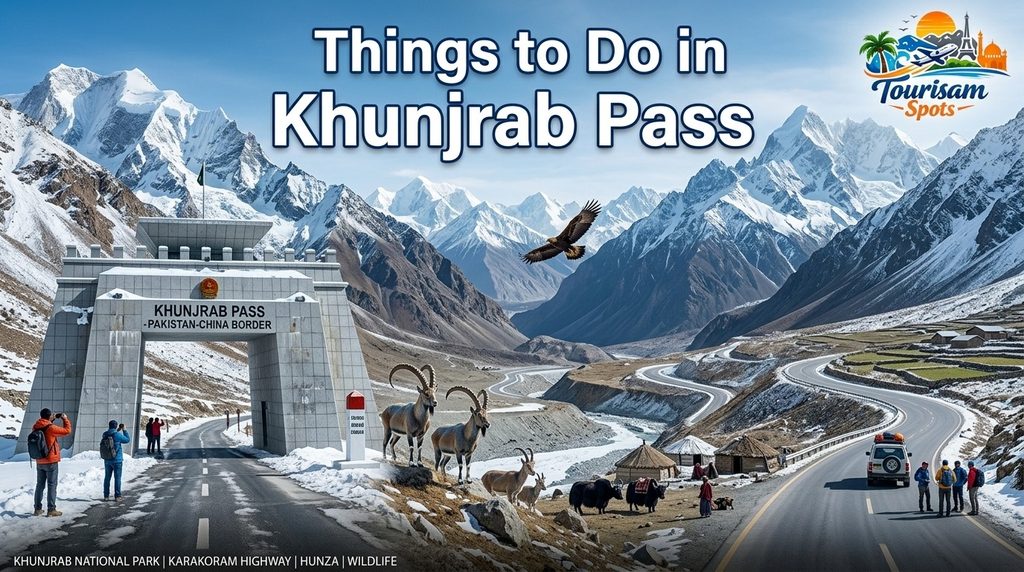
The journey itself along the Karakoram Highway toward Khunjrab Pass is an experience in itself, going through stunning river valleys, little mountain settlements and vistas offering some of the best beauty in the whole region. Many travelers also break their journey at Sost or adjacent Hunza to sample local culture, food and the slower pace of life in these mountain settlements. Local guides in Hunza can also organize small stops at glaciers and vistas along the journey, so a simple border run can become a longer day of sightseeing.
Getting There: Transportation Options
Usually, the journey to Khunjrab Pass begins from Hunza or Gilgit. The majority of tourists opt for a private vehicle or a small group tour to drive on the Karakoram Highway. Public transport is scarce and a reliable vehicle is a crucial part of any trip, given the quality of the roads.
Most people start their transportation at Hunza or Gilgit, hiring a private vehicle or joining a small group tour to go on the Karakoram Highway. Public transport is scarce and a reliable vehicle is a crucial part of any trip, given the quality of the roads.
The trip from Hunza to the pass and back usually takes a whole day because of the distance and the twisty mountain routes. Some travelers opt to break up the trip by stopping overnight in Sost, which means the final leg to the border is shorter and offers more time to enjoy the surroundings without feeling rushed.
Tourisam Spots: Kunjrab Pass
Tourisam Spots is the place to get interesting travel guides, spectacular scenery and unique activities. From the breathtaking high altitude beauty of Khunjerab Pass to the beautiful Snow Capped Mountains, Tourisam Spots will enable travelers to discover some of the most fascinating sites in the globe. We also offer professional Guest Posting and Content Writing services for travel businesses, bloggers and marketers who want to tell their story to a wider audience. You can also check out our Write For Us page to share your travel experiences and knowledge or our Contact Us page to get in touch with our team. Tourisam Spots is about making it easier, more informative and motivating to explore wonderful locations.
Final Thoughts
The Khunjrab Pass Pakistan, has something few places in the world can match: a paved road that climbs to the roof of the Karakoram range and terminates at the literal boundary of another country. With its position on the ancient Silk Route, its dramatic height and its location inside one of Pakistan’s most stunning national parks, it is still one of the most memorable places in Northern Pakistan.
For the history, the mountains, or simply the chance to stand at one of the highest boundaries on earth, a trip to Khunjrab Pass pays off for travelers willing to make the journey north, if they plan around the weather, the season, and the reality of travel at this altitude.